
If you want your body to move the right way to hit solid golf shots, there are a few concepts you must understand. There aren’t many strict “rules” in golf technique, but understanding these fundamentals dramatically increases your chances of making the correct motion and hitting the ball the way you want to.
In many of my lessons, it’s clear there’s confusion about how the golf ball actually gets airborne. That misunderstanding often leads to incorrect technique. Lots of recreational golfers, especially at the beginning ranks, think you need to get under the ball to lift it in the air, but that’s not the case. To get the ball up, you’ve got to be willing to hit the ground.
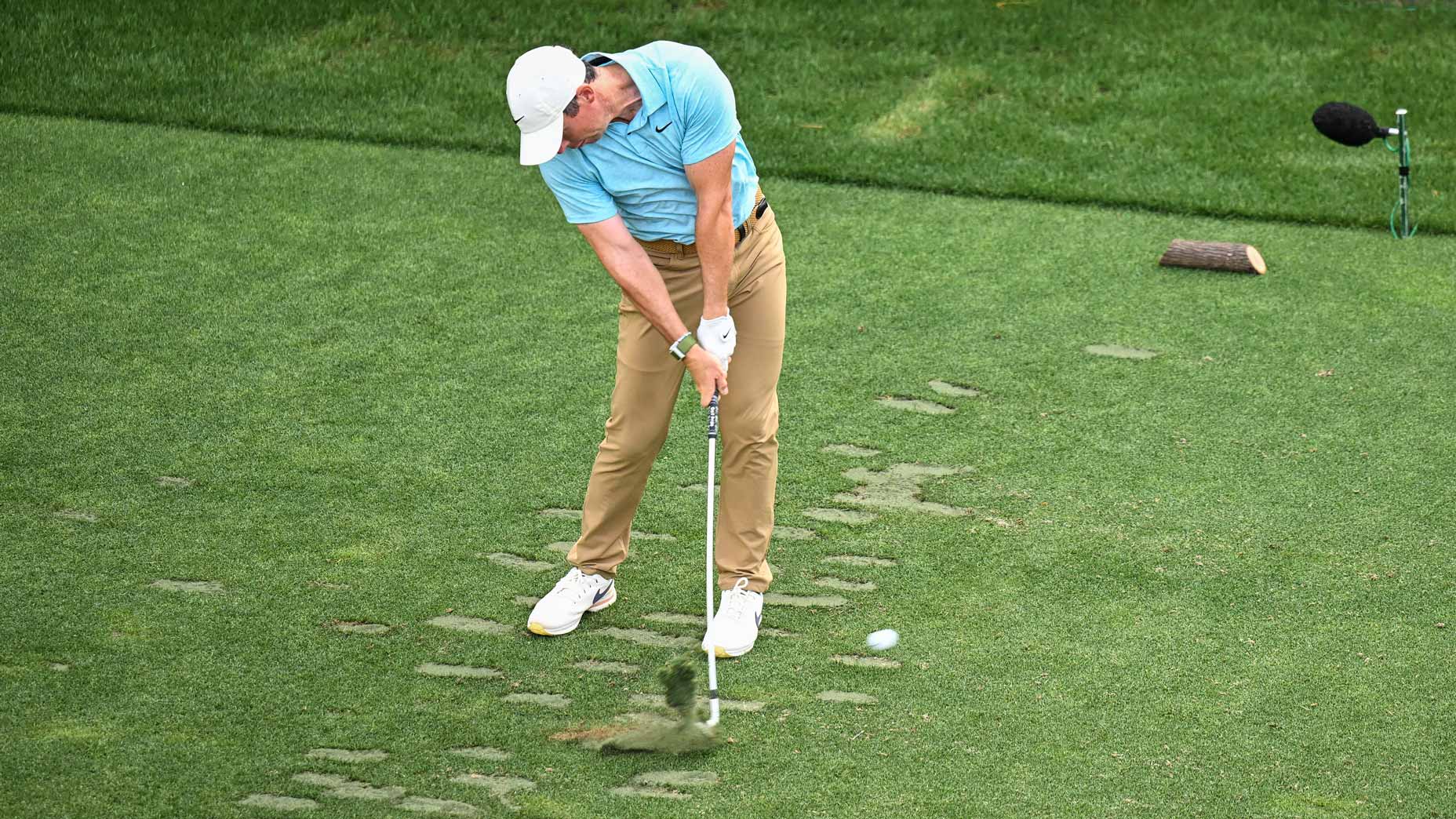
If the low point of your swing is above the ground, you might still get the ball airborne by catching it below the equator, But it won’t launch with the proper loft of the club. To use the club’s designed loft, the club must be moving downward when it strikes the ball.
A key part of getting the ball in the air is understanding contact order: ball first, then turf. With proper contact, the club strikes the ball and continues downward, creating a divot in front of the ball. If the divot starts behind the ball, the contact was not pure.
Ball position plays a major role in this, and so does your pressure shifting forward during the swing. As your weight moves toward the target, the club can more easily travel downward and reach its low point after the ball. While this may feel counterintuitive, it is essential to a solid swing and consistent contact.
View this post on Instagram
In greenside bunkers, ball position determines whether you hit the ball first or the sand first. If the club contacts the sand before the ball, the shot will travel a shorter total distance than if you strike the ball first and then the sand. The simplest way to control this is by adjusting your ball position, and understanding why that adjustment works.
If your ball position is more in the center of your stance, a normal swing will allow you to contact the ball first and then the sand. This maximizes launch and total distance.
If you’re closer to the green and need less carry, move the ball more forward in your stance. With your regular swing, the club will enter the sand behind the ball. This allows the sand to act as a buffer between the clubface and the ball, helping the ball launch softly while reducing total carry.
Keep these keys in mind when trying to add or subtract distance to your shots.
There is a time and place for forward shaft lean, and times when it works against you. If you lean the shaft toward the target without manipulating the clubface, you reduce loft. Less loft produces a lower ball flight and more rollout after the ball lands.
Is forward shaft lean at impact really just an illusion?
I often see golfers trying to clear a bunker and stop the ball quickly, yet they lean the shaft forward. That does the opposite of what they intend. It reduces loft and decreases bounce, making the club more likely to dig when it contacts the ground. Understanding the cause and effect of shaft lean helps you apply it correctly.
Distance control in putting is essential to scoring well. It reduces pressure by limiting the number of mid-length second putts you face. The length of your backswing should control your distance.
If a putt comes up short, it’s rarely because you decelerated. It’s far more likely that your backswing wasn’t long enough. If you don’t put enough gas in the tank, you won’t reach your destination. When you leave a putt short, tell yourself the truth: You needed a longer backswing.
The opposite is true as well. If the ball rolls too far past the hole, your backswing was likely too long. Keep it simple. Understand the true cause and effect. That clarity is what allows improvement to happen.
View Product
The post Understanding these 5 concepts makes golf much easier appeared first on Golf.