One of the benefits I find most meaningful about this practice (and one that science backs up) is that it can create neurological, physiological, and biological shifts that help us behave in more friendly and compassionate ways. Meditation teacher Sharon Salzburg, who has been one of the guiding forces in making loving-kindness practices accessible in the West, uses the plain but beautiful phrase “just like me.” Just like me, you have suffered and long to be at ease…Just like me, you want to feel cared for and safe. Let those possibilities soak in as you think about them in relation to someone else. How do they settle in your body?
As we absorb this practice and spend deep time with the heartfelt energy represented by the words, our feelings of separation, anxiety, and even aggression can soften. As we then spend less time vigilantly scanning for danger and threat, for what’s out there and different, we can expand our capacity to feel more connected to ourselves and to each other. In our current climate of deep social division, nurturing this capacity—this connection to our shared humanity—feels like the opposite of bypassing what’s difficult. It feels like one of the most direct routes back to ourselves and to each other.
Simple, but not always easy. Here are some thoughts for times when loving-kindness feels challenging.
“How do I practice loving-kindness toward myself when I don’t feel it?”
As I said, it’s often not easy to send feelings of friendliness, care, generosity, and kindness toward ourselves. We may feel that we’re unworthy or that we shouldn’t expect to be happy when there’s so much suffering in the world. That’s why, even though the traditional sequence of the practice is to start with yourself, you may find it’s better to first tap into wishes of love and care by calling them up for someone “easy”: a small child, a beloved mentor, even a pet—someone who inspires the impulse: Of course I want them to be happy, safe, at ease. Pema Chödrön puts it this way, “Who we start with isn’t critical; the point is to contact an honest feeling of goodwill and encourage it to expand.” As those wishes do start to expand and boundaries dissolve, you may find it possible to turn Sharon Salzburg’s phrase around: Just like them, I want to be cared for and loved, too.
“How can I practice loving-kindness without bypassing grief, sadness, or what I am feeling at the moment?”
Many prominent modern teachers of loving-kindness would suggest that these practices are often about grappling with what is sad or hard or uncomfortable, and that we should acknowledge that rather than sweep unhappy feelings under the rug—or try to “fix” them—with sentimental shortcuts. Tara Brach often begins loving-kindness practices with a time of coming home to what is actually present in the body and mind and then meeting those feelings with “awake awareness” that can hold it with some kindness. That might mean investigating when we close down, protect, or erect barriers to what we’re feeling in the moment. Jack Kornfield offers that, if the practice “brings up feelings contrary to loving-kindness — irritation, anger, or other difficult emotions — then it is especially important to be patient and kind toward yourself, allowing whatever arises to be received in a spirit of friendliness and kind affection.” And beloved teacher Thich Nhat Hanh often encouraged practitioners not to resist or suppress emotions such as sorrow or anger but to meet them with compassion, “like holding a crying child.”
“What are some ways I can weave metta meditation into my classes as a yoga teacher or into my everyday life?”
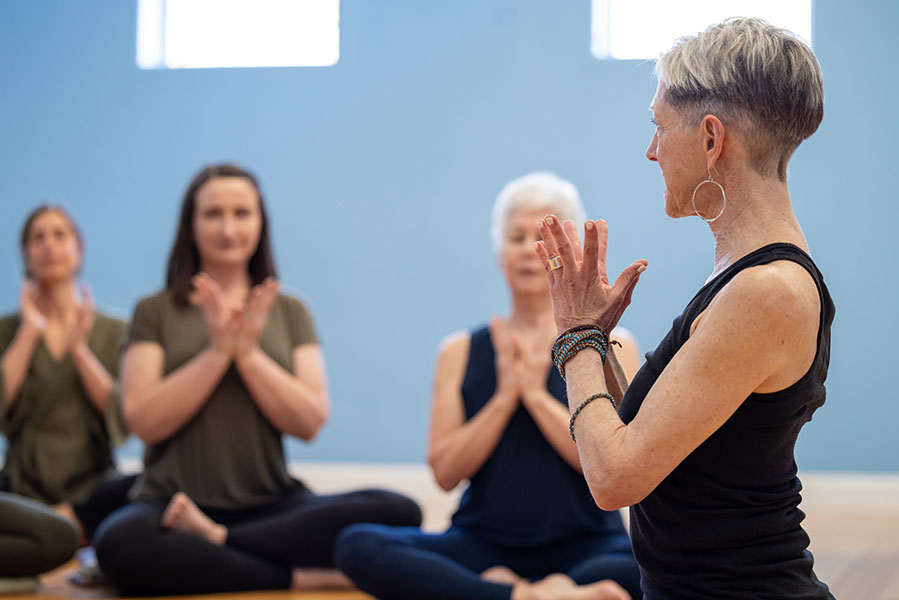
At its heart, metta meditation is about tuning into the “soft, unguarded place” described by Pema Chödrön, and moving, breathing, acting, and interacting from there. In classes, I’ll often begin by inviting people to acknowledge the quiet, genuine impulse toward well-being that brought them to class—whatever that means to them. Maybe they came to feel stronger or more flexible. Maybe they came to get grounded and calm their nervous system. But some impulse toward well-being that we might call loving-kindness brought them to practice. Then I invite them to recognize that they’re surrounded by others who showed up with their own version of that same impulse. All of a sudden, everyone is “just like me,” working from a soft, unguarded place, hoping to make the human condition a little smoother, more navigable, kinder, and move loving toward ourselves and each other.
That can be enough—or it can be a springboard for a more involved exploration of metta. You can, of course, lead a metta practice at the end of class. I’ve sometimes even woven the ripples of wishes throughout the class, pairing them with pose sequences, and ending with that wide expanse of wishes of peace and ease radiating out at the end.
This can all apply to everyday life as well. Again, it starts with any “genuine feeling of heart,” as Chödrön says. We might tap into the feeling through gratitude or appreciation or some small connection—anything that helps us touch that natural impulse toward well-being, whether we’re directing it toward ourselves or another. Let it be simple, like the feeling you have when you naturally smile at someone. Jack Kornfield calls this state our “birthright.” Over time, it may become easier to conjure it, almost like a Pavlovian response to thinking about a certain person or interaction or even a place in the natural world. We can use a gesture, such as a hand on our heart, a soft smile, or subtly hugging ourselves, to let the feeling settle in our bodies. And then we pause, take a breath, and agree to respond to what’s next from that place, letting the feeling ripple out. We do this over and over again, patiently, gently as we let the process accumulate.
“What if the traditional language of loving-kindness meditation sounds cheesy, inauthentic, or just clunky to me (or my students)?”
You should absolutely adapt the language so it’s meaningful to you and feels natural! The words are simply a vehicle for tapping into an honest desire for ourselves and others to experience peace and ease as we move through the world together.