
If you’re anything like me, you live in a state of constant fear of leaving something on the table when it comes to your golf equipment.
And apparently, many of you are, because our most-read equipment story from 2025 was about the three gear mistakes we see amateurs make the most.
This is aside from thinking you’re not good enough to go get fit — which, spoiler alert, you are! We’re talking about mistakes that come from building your bag, like playing a set of irons that won’t give you stopping power into greens for precision, or setting up your driver to only give you max yardage in certain situations.
Then there’s the one thing fitters love to see because it makes their jobs easier, which is when golfers have multiple clubs that go the same distance!
If you’re guilty of any of these gear mistakes, fear not! You’re not alone and we explain how to fix them below.
As many players have noticed, iron lofts have been getting stronger and stronger over the years. While Tiger Woods still plays a 49-degree pitching wedge — a more common configuration from the 80s, 90s and earlier — many players’ distance and game-improvement sets come with pitching wedges between 42 and 45 degrees.
That may be great for some players, given the high-launching tech in some of those irons. But it doesn’t work for everyone and there’s a reason many pros use weaker lofted irons.
Why Billy Horschel’s iron change is one you can learn from | Tour Report
“The majority of consumers, if they get fit, they’re getting fit in an indoor environment, hitting into a screen and the primary parameters that they are looking at are ball speed and total distance,” said Kris McCormack, formerly the VP of Tour and Education at True Spec Golf. “We know that’s achieved by stronger lofts, and typically, that results in lower spin, shallower Apex height, shallower landing angles. So you’re picking up distance but you’re sacrificing control coming into the green.”
What’s the point of being able to hit a 180-yard 7-iron if you can’t stop the ball on the green?
McCormack said you should look for a set of irons that allows you to get the ball high enough (at least 80 feet in the air for an 80 mph 7-iron speed) with a landing angle above 45 degrees so you can land the ball at your target and get it to stay there.
There’s a similar effect that happens with your driver.
If you want the fastest ball speeds, well, you can simply drop the loft of your driver. That might produce the longest shots if you’re playing on dried-out linksland conditions where the ball can run forever, but as McCormack points out, the conditions where our ball lands are always changing.
3 of the best 2025 PGA Tour drivers had this 1 thing in common
You might have a 9-degree driver head that gets you to 150 mph ball speed. But if your peak height is only 70 feet, that’s not going to optimize your carry distance, which would lead to more distance on average.
However, if you get a more lofted driver that gets the ball higher in the air — even if it costs you 1 to 2 mph of ball speed — you’re going to carry it farther and hit longer drives more often.
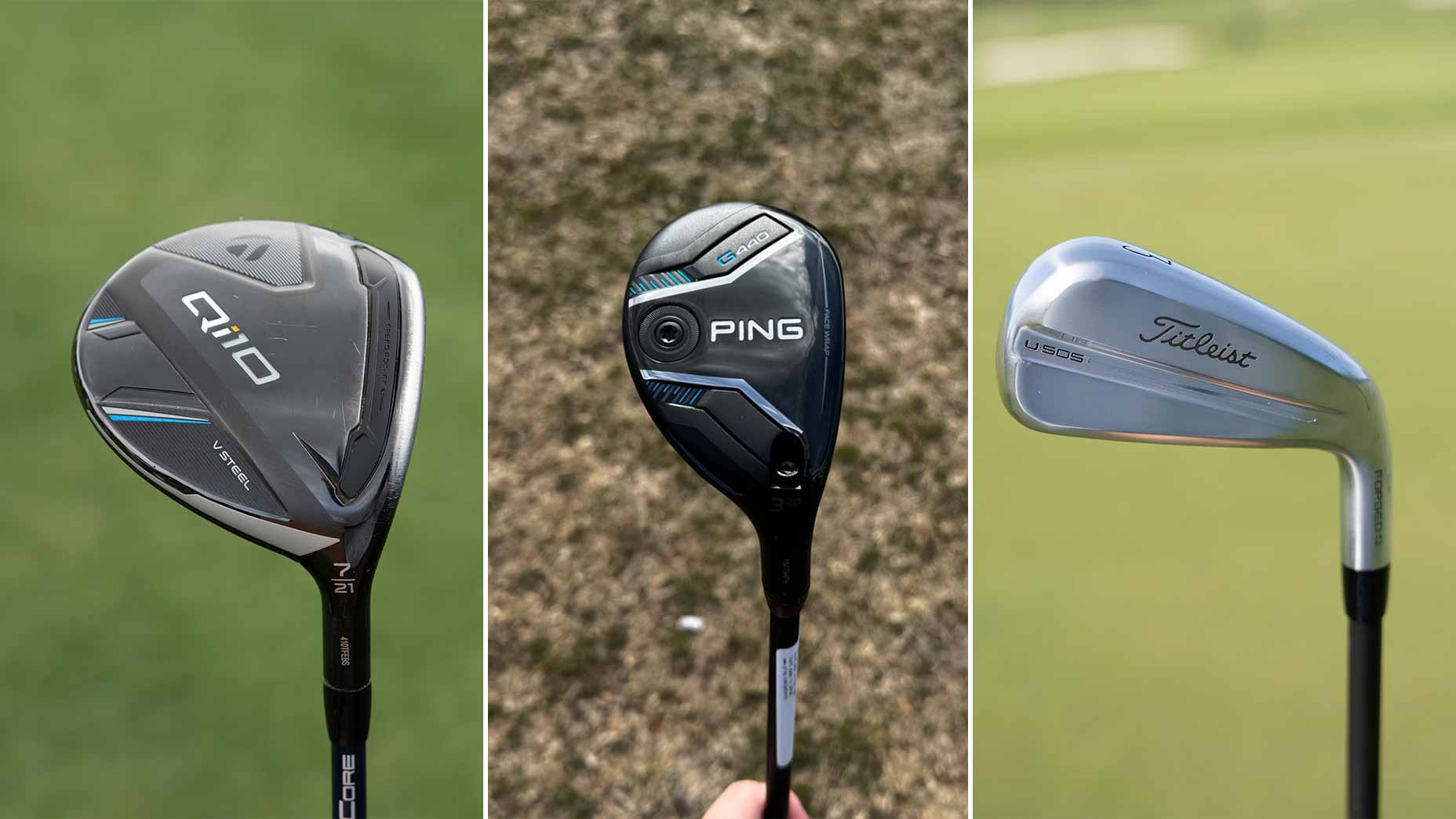
Many amateurs with slower swing speeds are better off with a 4-wood or a 5-wood as their longest club after the driver — not necessarily a 3-wood.
Is a fairway wood, hybrid or driving iron right for you? Here’s how to know
“If they drive the ball 220 yards in the air and the average clubhead speed hangs out in the mid-90s, a 3-wood off of the deck carries 210 yards, but when you look at a 5-wood now all of a sudden the five wood carries 212,” McCormack said. “Why? Because it hits the ball higher with more spin.”
The 3-wood might still end up going farther because it rolls farther, but that won’t apply if the ball lands in the rough or into a hill.
This is why it’s good to go through a proper fitting and ensure you have 5 mph of ball speed separation with every club.
That remains true throughout the bag. If you can’t hit a 4-iron at least 5 mph faster than the 5-iron, then it’s time to get rid of the 4-iron and consider options like a 4-hybrid or even a 9-wood to fill the gap properly.
Want to overhaul your bag in 2026? Find a club-fitting location near you at True Spec Golf.
The post Why this was our most popular gear-hacks story of 2025 appeared first on Golf.