

I was fortunate enough to play lots of new-to-me courses in 2025, but my venture to Chambers Bay, the muni darling of the Pacific Northwest and site of the 2015 U.S. Open, was easily my favorite for one simple reason:
I didn’t know what to expect, and it totally exceeded whatever expectations I ended up having.
You see, three factors had shaped my image of Chambers Bay: 1) That 2015 U.S. Open won by Jordan Spieth, where pros and fans alike bemoaned of bumpy greens, a weird setup with a changing par and a sketchy Dustin Johnson 3-putt to close it out. 2) My own dad’s experience with the course and him telling me he didn’t like it … tough way to start out for the ole muni. 3) The recent praise of the course (championed by GOLF’s own Seattleite Dylan Dethier), which had its greens redone and has since hosted the 2022 U.S. Women’s Amateur.
But, it is golf, and when I scheduled a trip to Bend, Oregon and then Seattle this past November, I knew I had to drive down to University Place and check out the course myself.
My initial attempt to book a tee time at Chambers a month in advance of my visit was unfruitful. I wasn’t sure what kind of demand there would be in late fall in the Pacific Northwest, where the weather could have been anything, but there were no tee times available for a single.
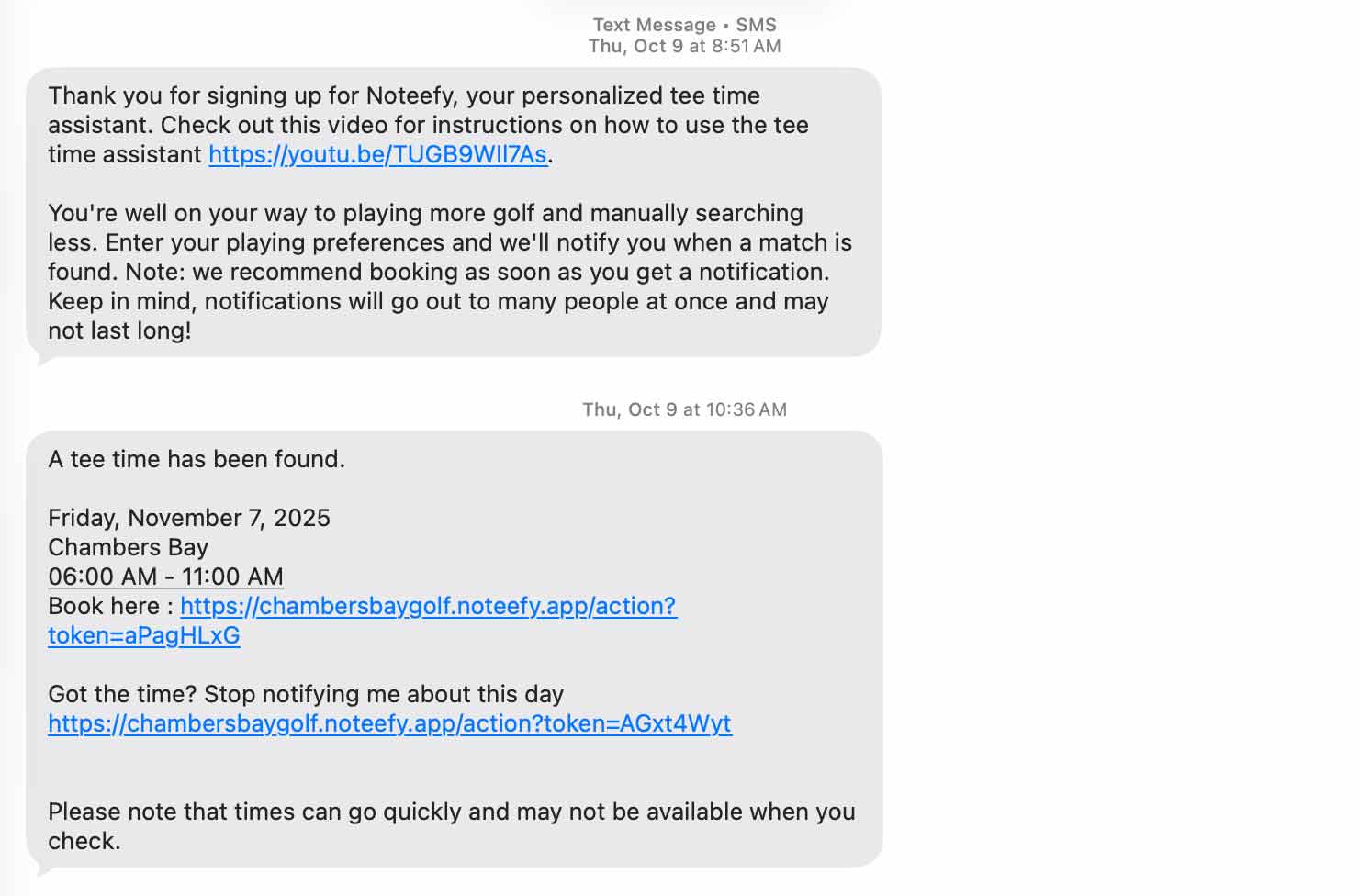
Luckily, the course allows you to put your name on a waiting list for a spot and not two hours after I put my name on it, I got a text that a single spot was available at 10:36 a.m. the day I wanted to play. Plenty of time for the one-hour drive down from Seattle and to be back in time for a dance class at the Chihuly Garden and Glass museum with my fiancée that evening.
Lo and behold, I would be paired with a father and two sons from the Pittsburgh area, making our group a full Keystone state quartet.
As it turned out, we got extraordinarily lucky with the day we chose to play. I had just come from three days in Bend, where I experienced possibly the worst three-day stretch of weather I’d seen there (and I lived there for two years. We had rain and wind every day in a place that is known for having 300 yearly days of sunshine.)
The weather in Seattle and Tacoma is probably much more unpredictable, so when I saw a 40 percent chance of rain for the day of my tee time at Chambers, I prepped for the worst.
But by the time I arrived at the golf course, the clouds were staying out and the sun was beating down on the course, the site of an old sand quarry along the Puget Sound and centerpiece of a 930-acre park. Temperatures were in the mid-50s, and I only had to decide whether it was too warm for my outer layer or not.
There’s a bit of a process when you check in to play at Chambers. The parking lot and clubhouse are perched above the course with an outstanding view of the property and after checking in, you’re shuttled down to the first tee and driving range, complete with a brand new halfway house.
After hitting a few balls on the range, I decided to play the blue tees at 6,748 yards — one step off the tips. The true length of the course is over 7,800 yards, but a staff member in the pro shop told me you have to “have played in a U.S. Open” to go back there.
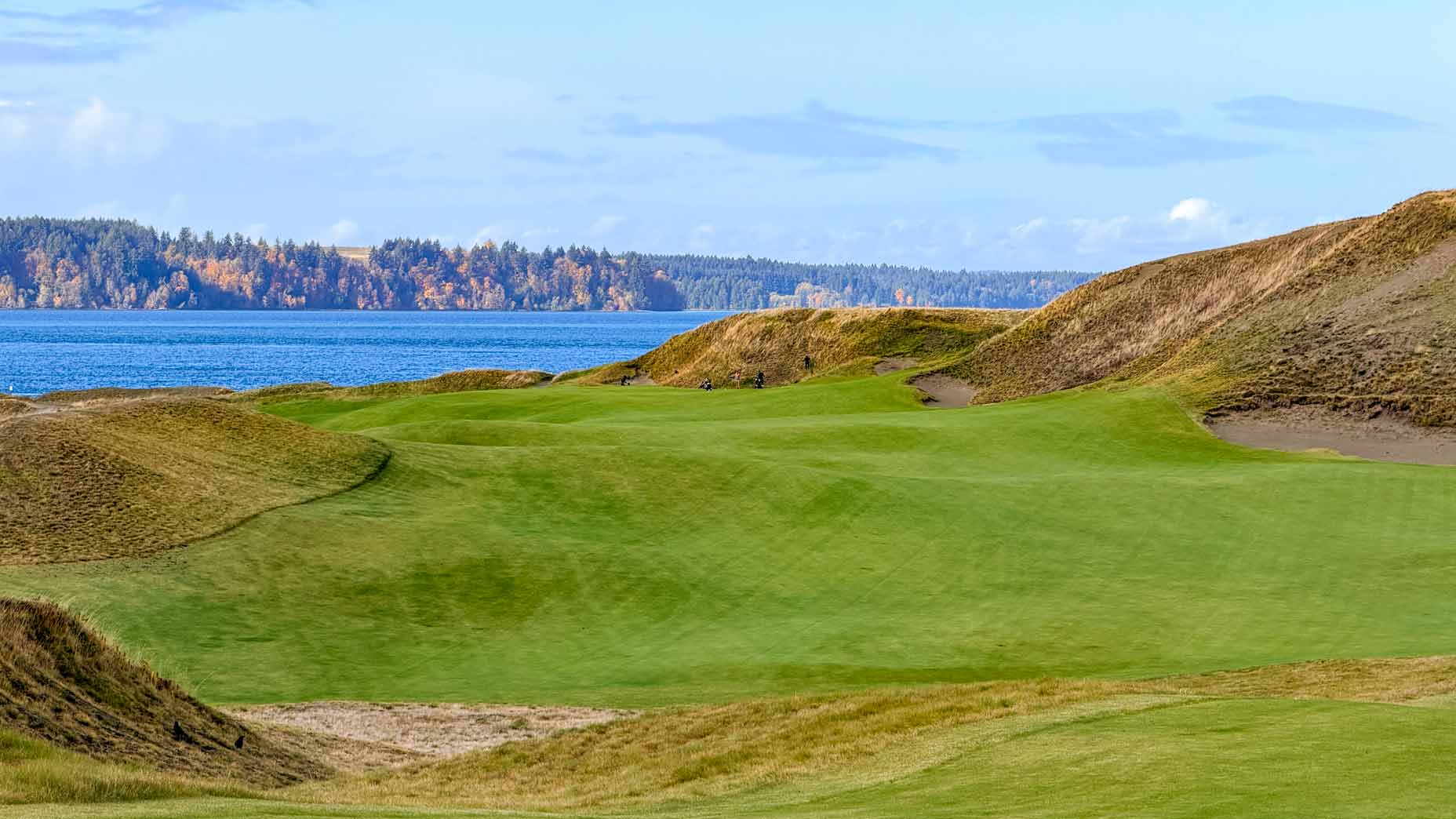
The first hole sets you up for the day, a downhill tee shot with a massive dune to the right, a massive rolling fairway that falls off to the 18th fairway below and an elevated green. At times, this hole has played as a par-5, but I got to start my round off with a brutish, nearly 500-yard par-4.
This is where I hit my best three shots of the day by far. A roasted drive straight down the middle and then a flushed 7-iron to around 18 feet, which I converted for an opening birdie. I thought, was this really where the U.S. Open was?
From what the starter and other staff members told me, all the changes to the course since the U.S. Open have made the links-style course play easier. But given the design of the course with uneven lies, huge bunkers and massively sloped greens, there were still places you could make big numbers.
To me, the course is set up to have a good time and play a fun and exciting round. That means there were plenty of birdies and bogeys on my card.
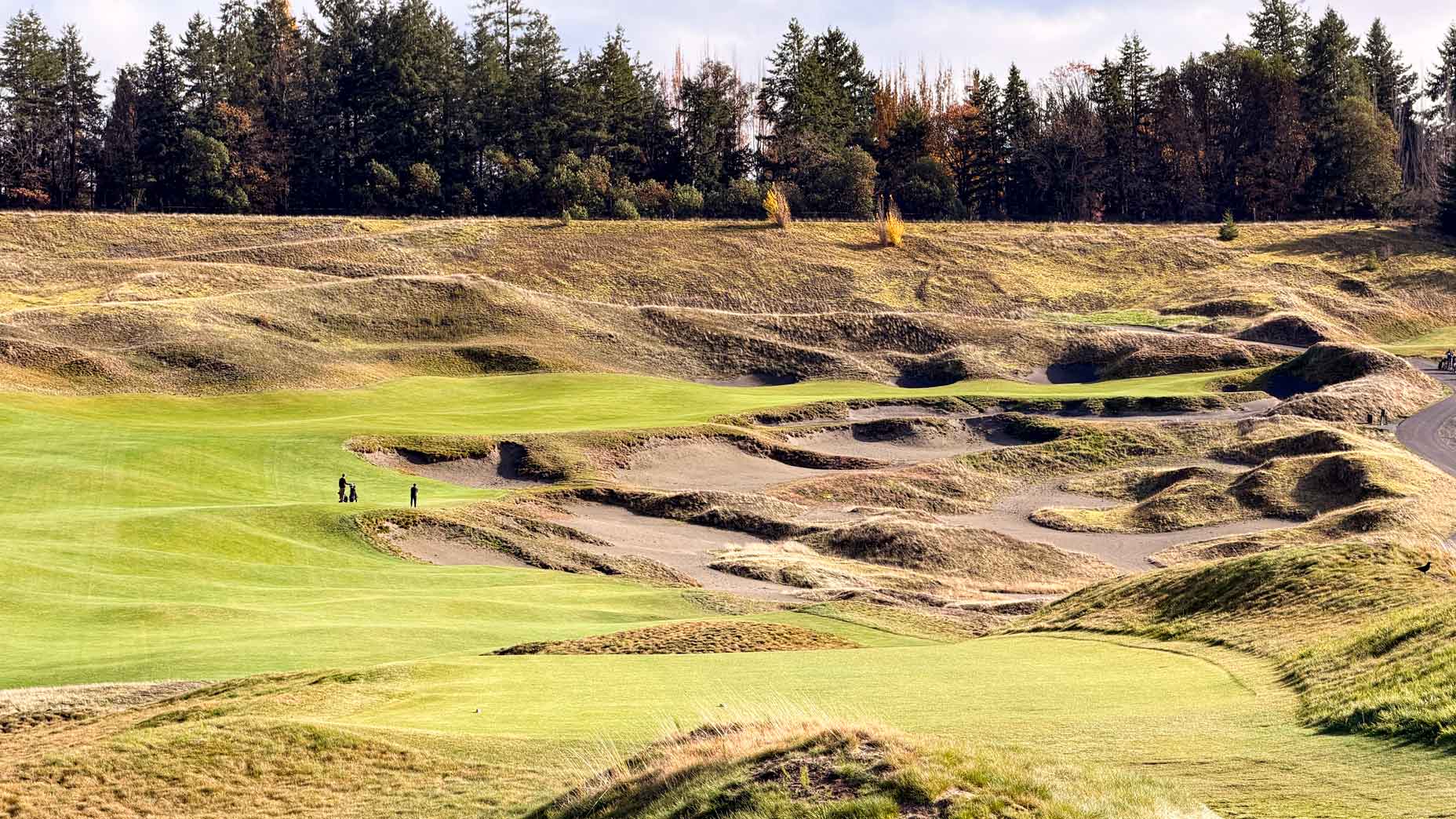
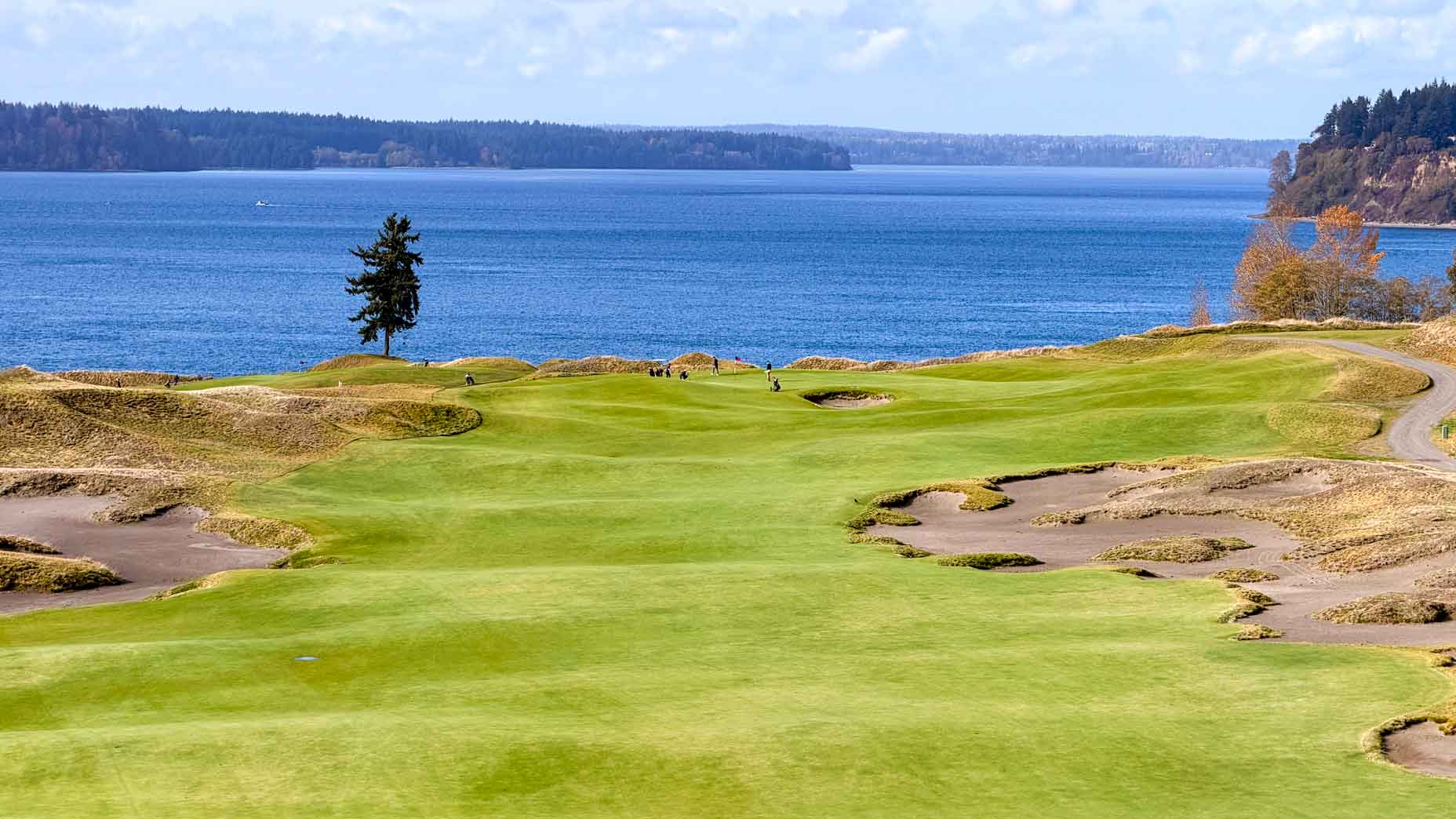
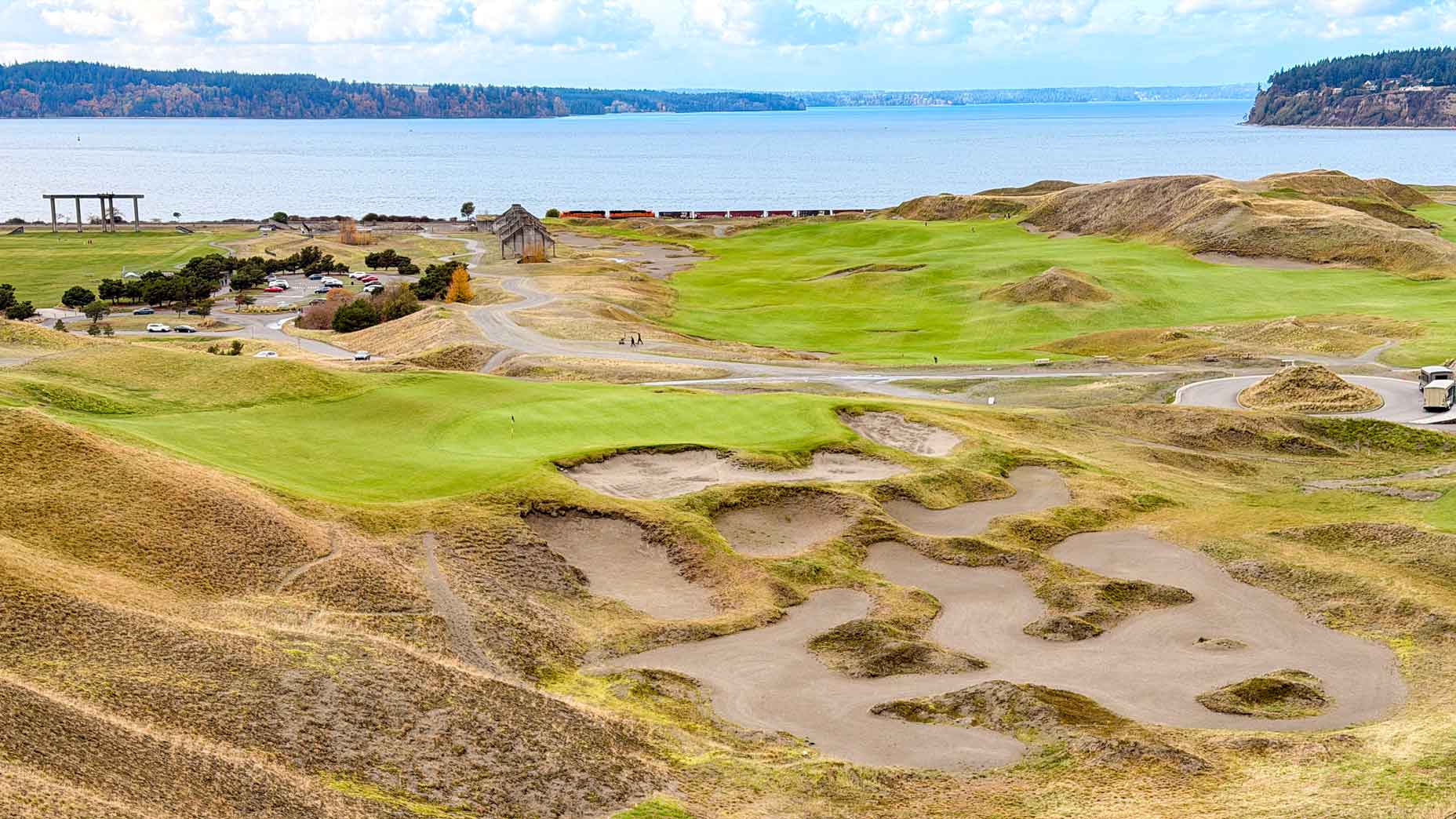
Sometimes you would look at a tee shot and wonder how far the corner of the fairway or a bunker was, only to have it be much farther or shorter than it looked. The elevation change really played with my depth perception.
Throughout the round, you’re going up and down and across the sprawling property, which has around 200 feet of elevation change as you go between the shore of the Puget Sound and Grandview Drive that overlooks it.
There are some holes where you have tons of room to play off the tee, and then there are others like No. 5, No. 8 and No. 10, where you have to seemingly thread a needle between bunkers or a massive drop off.
It sure looks like you have to thread a needle on No. 12, a short, uphill, drivable par-4 where a long skinny green sits between two massive mounds. I thought I completely missed it when I blocked my mini driver from 250 onto what looked like the wrong side of the right side mounds. But when I got up to the green, I was shocked to see my ball just below the green with just a simple uphill putt left for eagle.
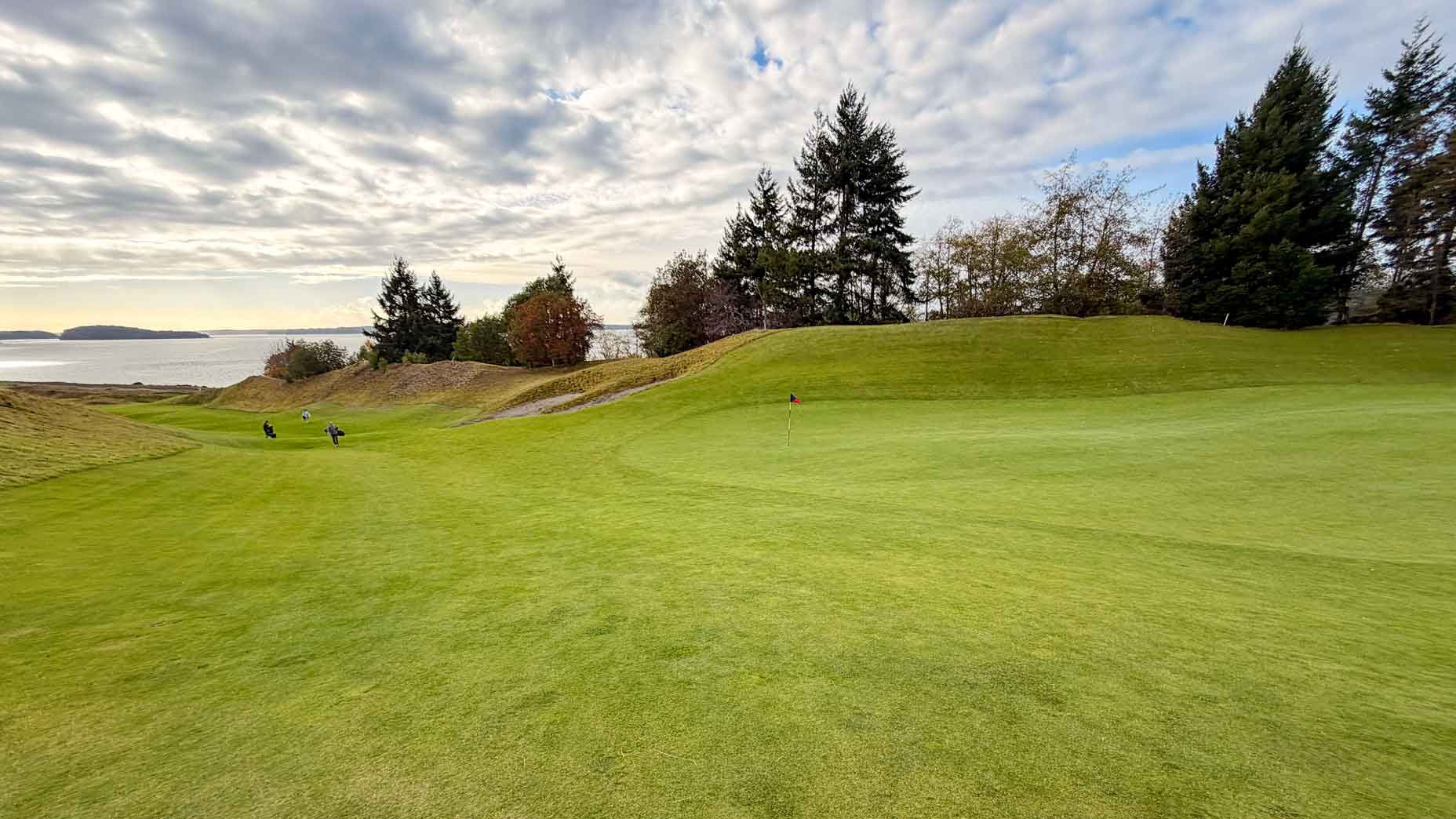
Was that luck or my plan all along? We’ll never know! (Yes, we do!)
The 12th is the last climb up before the dramatic finish of the long downhill 14th and the signature stretch of 15-17 along the BNSF Railroad tracks and Puget Sound shore.
That was something I again didn’t expect. I love trains and think railroad tracks next to a golf course instantly make it better. Look at all the great courses in Scotland that have a railway nearby, especially along the Ayrshire Coast with places like Troon, Prestwick, Western Gails and more on either side of the tracks.
The freight train line runs right along 15-17 at Chambers — the 16th is even named “Derailed” — but there must have been 15-20 trains pass by in the five hours of my round (yes, it’s a big course with big greens and big mounds and it’s a muni, it took a while to play!).
I wanted to make sure I could get a picture of the lone fir tree behind the 15th green, the only tree on the property, with the train running behind it. Right on cue, as we walked on the 15th tee, a beautiful little drop shot par 3 with the water behind, the train rolled right on through.
With an earlier birdie on 13, I had gotten myself back to even par, but bogeys on 15, 17 and 18 sunk me to a disappointing 75, but that was the only thing I could have been disappointed about.
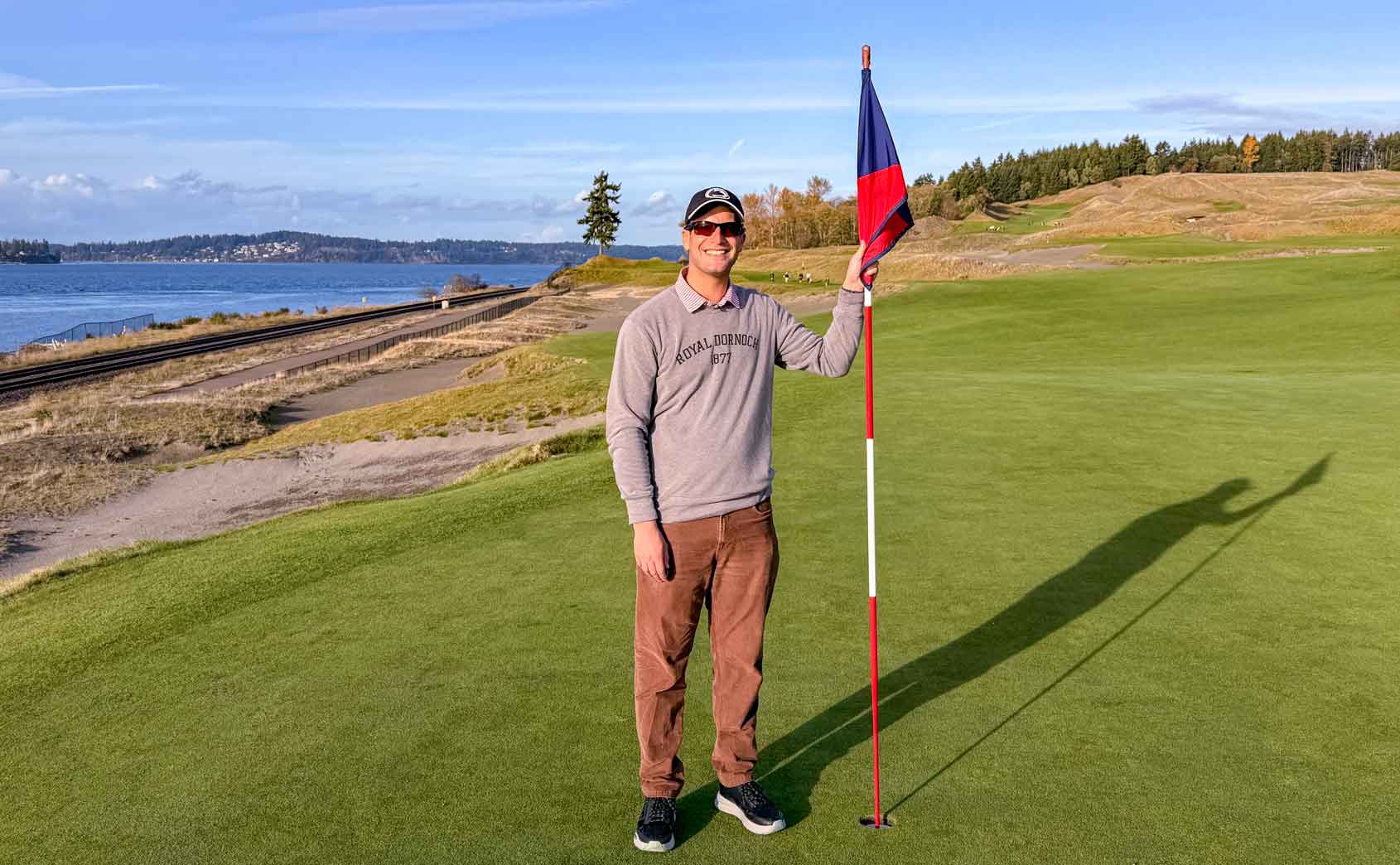
I got the tee time, got the perfect weather day and got to enjoy one of America’s great public golf courses. In terms of days playing a single far from home, it was tough to top.
The post Why this heralded PNW Muni was my favorite course I played in 2025 appeared first on Golf.